
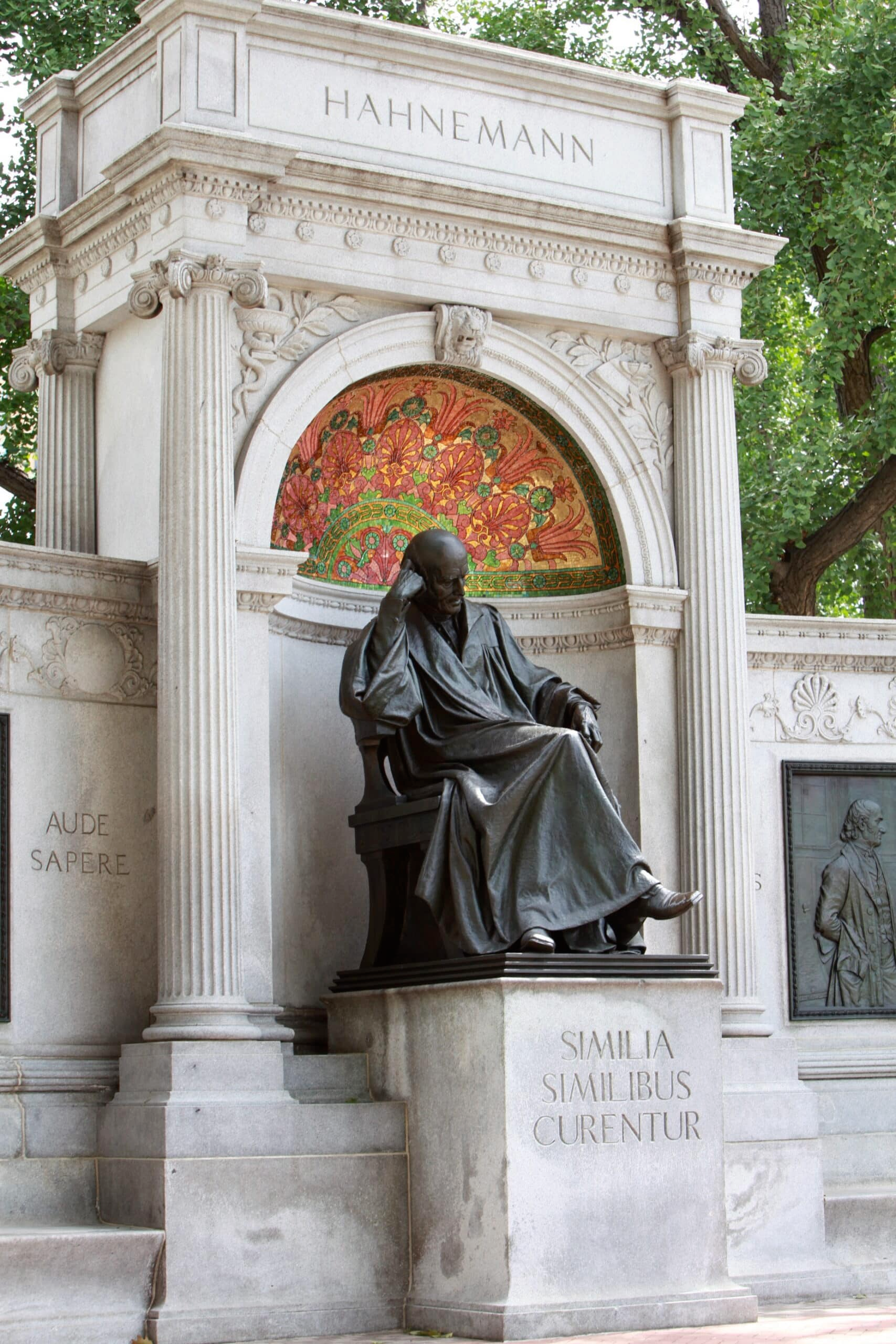
A Tribute to Dr. Samuel Hahnemann on His Birthday (April 10th)
On this day, April 10th, we honor the birth of Dr. Samuel Hahnemann, the founder of homeopathy, whose insights into chronic disease remain profoundly relevant in modern practice.
One of his most practical and often under-appreciated teachings is the concept of maintaining causes—a principle he clearly emphasized in the Organon of Medicine.
In today’s world of chronic fatigue, burnout, and hormonal imbalance, his wisdom offers a crucial reminder: true healing cannot occur if the factors maintaining disease are left unaddressed.
What Are Maintaining Causes?
Maintaining causes are ongoing influences that continually stress or disrupt the body’s natural healing capacity. While a remedy may stimulate healing, maintaining causes keep re-triggering imbalance in the system.
Think of it this way:
You cannot fill a bucket if there is a constant leak. In chronic illness, the remedy supports repair—but maintaining causes keep “opening the leak.”
In the Organon, Hahnemann repeatedly stresses that the physician must identify and, where possible, remove obstacles to cure. He writes in Aphorism 3 that the physician must clearly recognize:
“what is to be cured in disease… and… what is curative in medicines,”
but also importantly, what hinders recovery.
Further, in Aphorisms 4 and 5, he emphasizes the need to understand:
- The exciting and maintaining causes
- The individual’s lifestyle and circumstances
Without this awareness, treatment remains incomplete.
Why Maintaining Causes Matter So Deeply
Hahnemann was very clear: Even the most well-selected remedy cannot fully act if maintaining causes persist.
This is why patients sometimes experience:
- Initial improvement followed by relapse
- Slow or stalled progress
- Partial healing despite correct prescriptions
In such cases, the obstacle is often not the remedy—but the unresolved maintaining cause.
Common Maintaining Causes in Modern Life
Though Hahnemann wrote over 200 years ago, his observations apply remarkably well today. Maintaining causes can be physical, emotional, environmental, or lifestyle-related. Some of the most common include:
1. Chronic Emotional Stress
Ongoing anxiety, grief, responsibility overload, or unresolved emotional trauma can deeply affect the nervous system and hormonal balance. Even subtle but constant stress can maintain disease states.
2. Poor Sleep Patterns
Irregular sleep, late nights, or unrefreshing sleep prevent proper nervous system and endocrine recovery. Sleep deprivation is one of the strongest maintaining factors in chronic fatigue and hormonal imbalance.
3. Environmental Exposures
Mold, damp housing, chemical exposure, electromagnetic stress, or pollution can continuously burden the system and slow recovery.
4. Suppressive Medications or Repeated Antibiotics
While sometimes necessary, repeated suppression of symptoms without addressing root imbalance can contribute to chronicity in certain cases.
5. Dietary Triggers
Food sensitivities, excessive sugar intake, ultra-processed foods, or irregular eating patterns can perpetuate inflammation and hormonal instability.
6. Overwork and Burnout
A body in constant “survival mode” cannot heal. Continuous overexertion without recovery time is a major maintaining cause in adrenal and thyroid-related disorders.
7. Toxic Relationships or Emotional Environments
Living in emotionally draining environments can keep the nervous system locked in chronic stress physiology.
The Organon’s Guidance in Practice
In Aphorism 7, Hahnemann makes a crucial point: If the maintaining cause is still present, the disease cannot be fully cured. This aphorism highlights a fundamental principle: Remove what is maintaining the disease, and the vital force can respond more freely to the remedy. This is not merely philosophical—it is deeply practical.
The Role of the Homeopath
During a consultation, a classical homeopath carefully explores: lifestyle patterns, emotional history and current stress load, sleep quality, work and daily routine, environmental factors, suppressive treatments or medical history, diet and substance use patterns.
A classical homeopath does more than prescribe a remedy. The process includes:
- Identifying maintaining causes
- Understanding the patient’s life context
- Offering guidance on modifiable factors
- Supporting gradual, sustainable change
This approach honors Hahnemann’s vision of true healing, not just symptom suppression.
Can Maintaining Causes Always Be Removed?
Not always entirely—but they can often be reduced or better managed. Even small shifts can create significant changes:
- Improving sleep quality
- Creating boundaries around stress
- Adjusting diet
- Reducing environmental exposures
These changes allow the remedy to act more deeply and consistently.
The Homeopathic Perspective
In classical homeopathy, healing is not just about symptom removal—it is about restoring the organism’s ability to self-regulate. Removing maintaining causes is like:
- Turning off the tap while repairing the bucket
- Clearing interference so the remedy can act fully
- Supporting the body’s innate healing intelligence
A Reflection on Hahnemann’s Legacy
On his birthday, we are reminded that Samuel Hahnemann was not only a pioneer of remedies, but a profound observer of life itself. His teaching on maintaining causes reflects a simple but powerful truth: Healing requires alignment between medicine and the conditions of living.
Final Thoughts
If healing feels slow, inconsistent, or incomplete, it is often worth looking beyond the remedy alone. Maintaining causes are frequently the hidden reason chronic conditions persist.
A thorough case analysis that includes both remedy selection and lifestyle-environmental assessment is essential for deep and lasting healing. By identifying and addressing maintaining causes—just as Hahnemann taught—we create the conditions for deeper, more lasting cure.