
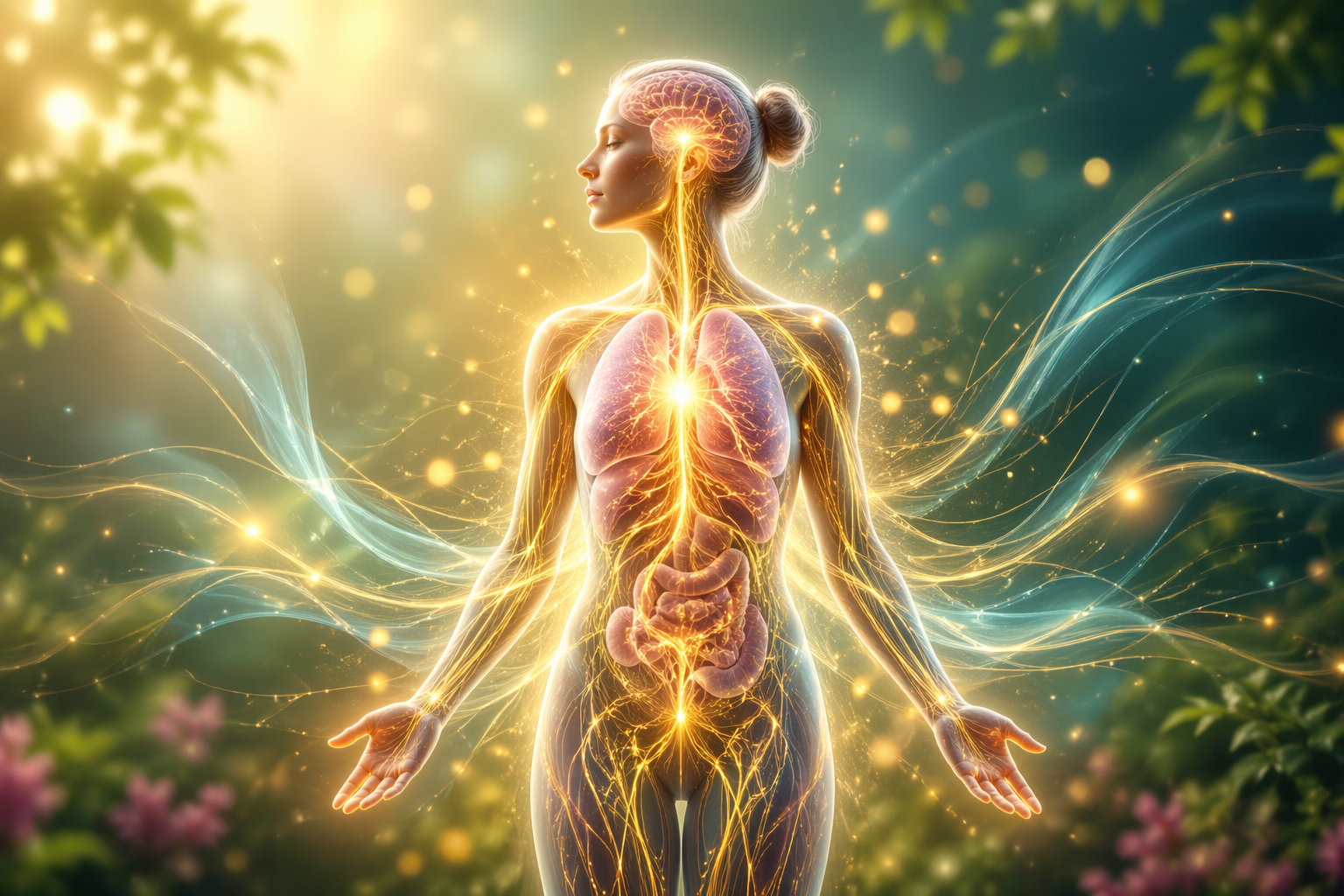
Many people are curious about homeopathy, but one idea often feels mysterious at first: the vital force. What is it? Is it just an old-fashioned concept? And what does it have to do with healing?
In simple terms, the vital force is the organizing intelligence of the body — the dynamic energy that helps maintain balance, adaptation, and health. In classical homeopathy, understanding the vital force is central to understanding how healing happens.
What Is the Vital Force?
Think of the vital force as the body’s internal coordinator. It is what helps regulate and harmonize countless processes at once:
- Sleep and wake cycles
- Hormones
- Immune responses
- Temperature regulation
- Digestion
- Mood and emotions
- Recovery after stress or illness
When everything is functioning well, you may not notice it at all — just as you don’t think about the conductor when an orchestra is playing beautifully. But when this organizing force is disturbed, symptoms can appear.
Symptoms Are Signals, Not Just Problems
In homeopathy, symptoms are not viewed simply as things to suppress. They are often understood as expressions of imbalance.
For example:
- Anxiety after prolonged stress
- Exhaustion that persists despite rest
- Recurring infections
- Sleep disturbances
- Digestive symptoms linked to emotional strain
Rather than seeing these as isolated problems, classical homeopathy asks: What is the pattern behind them? What is the body trying to communicate? This is where the vital force concept becomes useful.
An Analogy: The Orchestra Conductor
Imagine an orchestra. The musicians represent different parts of the body — hormones, nerves, immune system, digestion. The conductor represents the vital force. If the conductor is steady, the music is harmonious. If the conductor loses rhythm, the music becomes disordered. In this analogy, symptoms are the discord you hear. Homeopathy aims to support the system in restoring harmony.
How Homeopathic Remedies Are Thought to Work
Classical homeopathy uses carefully selected remedies based on the whole person — not just a diagnosis. The goal is not to “force” the body in a biochemical way, but to provide a stimulus that helps the system reorient itself. You might think of it like nudging a compass back toward true north. When the correct remedy matches the person’s symptom pattern, it is believed to encourage the vital force toward balance.
Why Two People With the Same Diagnosis May Need Different Remedies
This often surprises people. Two people may both have fatigue or thyroid imbalance, yet receive different homeopathic remedies. Why?
Because homeopathy treats individual patterns, not disease labels alone. One person with burnout may have:
- Restlessness
- Perfectionism
- Waking at 3 a.m.
- Digestive tension under stress
Another may have:
- Mental fog
- Collapse after overwork
- Sensitivity to noise
- Deep emotional withdrawal
Same diagnosis. Different pattern. Different remedy. This is why classical homeopathic consultations are often much deeper than symptom checklists.
Is Vital Force a Scientific Term?
“Vital force” comes from traditional homeopathic language, but many patients find it understandable when viewed metaphorically or functionally. Today some people relate it to ideas like:
- The body’s self-regulating capacity
- Adaptive resilience
- Neuroendocrine-immune balance
- The organism’s healing intelligence
Different words — similar attempt to describe the body’s remarkable capacity to restore order.
Why Homeopathy Looks at Mind and Body Together
Because the vital force is understood as governing the whole person, emotional and physical symptoms are not separated. Stress may affect digestion. Grief may affect immunity. Burnout may affect hormones and sleep. This interconnected view is one reason many people seek classical homeopathy for chronic patterns that feel deeper than isolated symptoms.
Healing Is More Than Symptom Removal
Patients often come seeking relief from fatigue, anxiety, thyroid imbalance, recurrent illness, or chronic stress. Of course symptom improvement matters. But many also want something more:
- Better resilience
- More energy
- Improved sleep
- Greater emotional steadiness
- A deeper sense of well-being
Classical homeopathy aims toward that broader restoration.
Curious Whether Homeopathy Could Help You?
If you have been struggling with chronic fatigue, burnout, hormonal imbalance, recurring illness, or symptoms that seem connected but unexplained, a homeopathic consultation may help uncover the larger pattern.Homeopathy is highly individualized, and understanding your unique case is often the first step.
If you’d like to explore whether classical homeopathy may support your healing, you are welcome to schedule a consultation. Healing often begins by understanding what your symptoms may be trying to say.
Frequently Asked Questions
Is the vital force the same as energy medicine?
Not exactly. In classical homeopathy, vital force refers to the body’s dynamic organizing principle, not simply “energy” in a generic sense.
Does homeopathy treat diseases?
Homeopathy focuses on the person experiencing the illness, not only the disease label.
Can homeopathy help with chronic stress or burnout?
Many people seek homeopathic care for chronic stress patterns, exhaustion, and related imbalances.
Ready to Explore a More Individualized Approach?
If you are looking for a deeper, whole-person approach to healing, book a consultation today to discuss your case. Your symptoms may be part of a larger pattern — and understanding that pattern can change everything.