
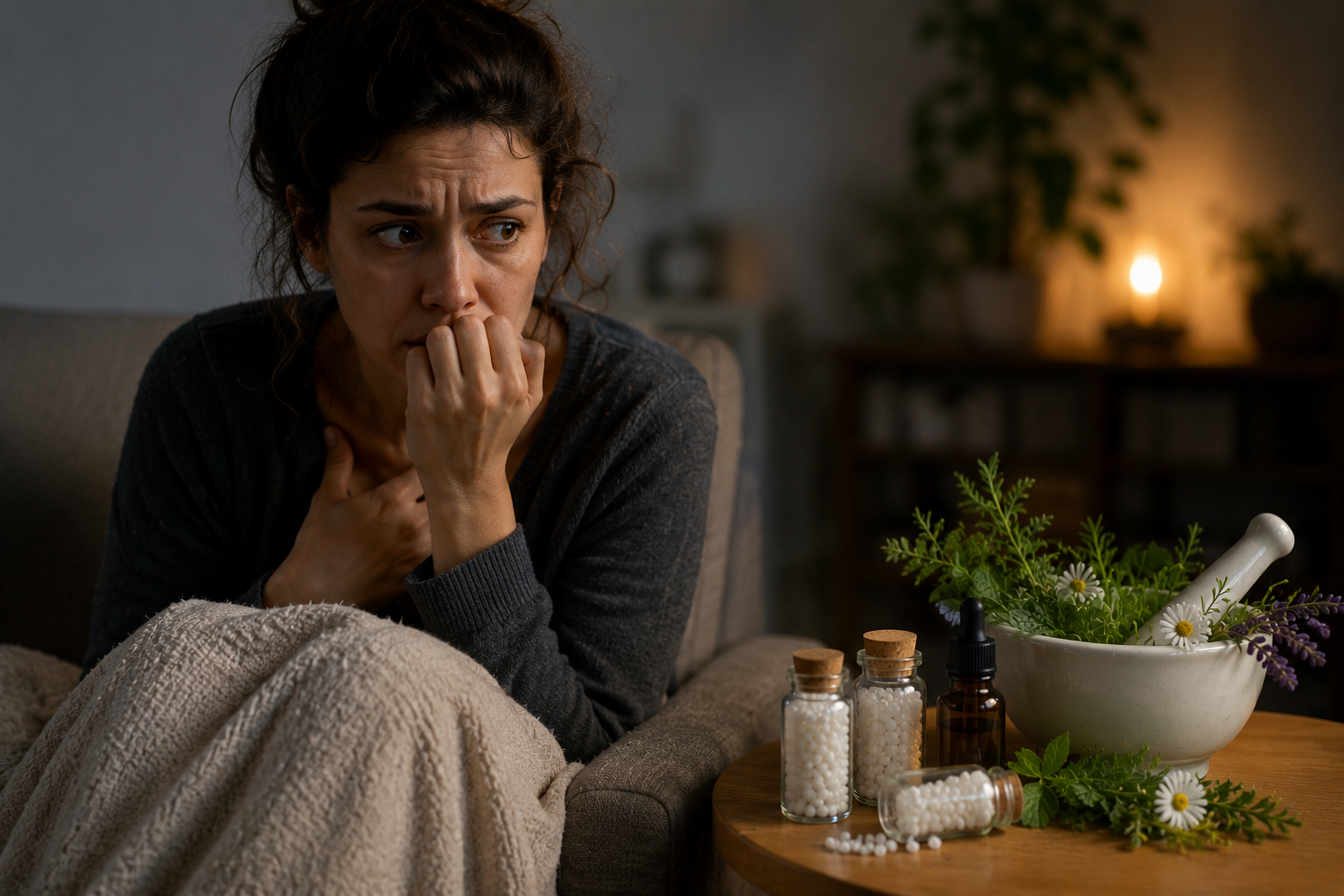
Anxiety disorders are among the most common struggles people face today. For some, anxiety feels like a constant background hum of worry. For others, it arrives suddenly and intensely as a panic attack — with racing heart, trembling, dizziness, chest tightness, or a terrifying sense that something catastrophic is about to happen.
Over time, repeated panic attacks can lead to avoidance behaviors. A person may stop driving, avoid crowded places, fear being alone, or feel unable to leave “safe” environments. This pattern is often labeled agoraphobia.
From a classical homeopathic perspective, these symptoms are not merely isolated diagnoses. They are expressions of a deeper imbalance affecting the nervous system, emotional state, and overall vitality of the individual.
Understanding Anxiety Beyond the Symptoms
Conventional approaches often categorize anxiety into separate conditions: generalized anxiety, panic disorder, social anxiety, agoraphobia, health anxiety and phobias.
While these labels can be useful, homeopathy looks deeper. Two people may both experience panic attacks, yet their inner experience can be completely different:
- One feels overwhelming fear of death
- Another fears losing control or going insane
- Another becomes intensely claustrophobic
- Another fears fainting in public
- Another feels anxious only when alone
- Another becomes restless, pacing constantly
These differences matter greatly in classical homeopathy. The goal is not simply to suppress symptoms, but to understand the unique pattern of the person experiencing them.
What Can Panic Attacks Feel Like?
Panic attacks can be extremely frightening. Common symptoms include:
- Racing or pounding heart
- Shortness of breath
- Chest tightness
- Trembling or shaking
- Sweating
- Dizziness or lightheadedness
- Tingling sensations
- Feeling detached or unreal
- Fear of dying
- Fear of fainting
- Fear of losing control
- Sudden urge to escape
Many people are told “everything is normal” after medical testing, yet the experience still feels very real and overwhelming. The nervous system can become highly sensitized over time, creating a cycle where fear of another panic attack becomes a trigger itself.
When Anxiety Turns Into Agoraphobia
Agoraphobia is often misunderstood. It is not simply “fear of open spaces.” More commonly, it involves fear of situations where escape may feel difficult or help unavailable if panic occurs. A person may begin avoiding: grocery stores, highways, public transportation, restaurants, crowded places, being alone and traveling far from home.
Eventually, life can become increasingly restricted. Many people with agoraphobia are highly aware that their fears may seem irrational — yet the body’s alarm response feels impossible to control. This is why reassurance alone is often insufficient.
A Homeopathic View of Anxiety Disorders
Classical homeopathy recognizes that emotional and physical symptoms are deeply interconnected.
Anxiety is not viewed as “all in the mind.” It often affects the entire organism: sleep disturbances, digestive issues, palpitations, fatigue, hormonal imbalance, muscle tension, hypersensitivity and exhaustion after stress.
Homeopathic prescribing attempts to understand the whole picture: what triggers the anxiety?, what makes it better or worse?, what fears are present?, what is the emotional pattern?, how does the body react? and what was happening when symptoms first began?
Often there is an underlying history of: prolonged stress, grief, shock, burnout, overwork, perfectionism, suppressed emotions, trauma and chronic health anxiety.
Common Homeopathic Remedies Considered in Anxiety and Panic
In classical homeopathy, remedies are selected individually. The following are examples of remedies sometimes considered based on symptom patterns — not self-prescribing recommendations.
Aconitum napellus
Often considered in sudden, intense panic states. Typical themes may include: sudden onset panic, fear of death, intense restlessness, symptoms after shock or fright and acute nighttime panic. The person may feel convinced something terrible is about to happen.
Arsenicum album
Frequently associated with anxiety accompanied by exhaustion and insecurity. Common themes may include: health anxiety, fear of being alone, restlessness, perfectionism, anxiety after midnight, needing reassurance, and fear something is seriously wrong. These individuals often appear externally controlled while feeling deeply anxious internally.
Argentum nitricum
Often considered when anxiety involves anticipation and loss of control. Possible patterns: anxiety before events, claustrophobic feelings, fear in crowds, impulsive rushing, digestive upset from anxiety, fear of fainting and fear in open or public spaces. People may feel hurried mentally and physically.
Gelsemium
Sometimes considered for anxiety associated with weakness and anticipation. Typical features: trembling, weakness, heaviness, mental dullness, stage fright, anticipatory anxiety and feeling paralyzed by fear.
Calcarea carbonica
Often associated with chronic anxiety in overwhelmed, overstretched individuals. Themes may include: fear of losing stability, overwhelm from responsibility, exhaustion, sensitivity to stress and anxiety about health or security.
Why Individualization Matters
One of the biggest misconceptions about homeopathy is the idea that there is “one remedy for anxiety.” There is not. The same diagnosis may require completely different remedies depending on the person’s unique mental, emotional, and physical state. For example:
- Panic with terror and intensity differs from panic with exhaustion
- Fear of fainting differs from fear of death
- Anxiety from overwork differs from anxiety after grief
- Restless anxiety differs from frozen, paralyzed anxiety
This individualization is central to classical homeopathy.
Lifestyle and Nervous System Support
While homeopathic treatment may be supportive for some individuals, nervous system regulation often also requires broader lifestyle support. Helpful foundations may include: consistent sleep, reducing overstimulation, balanced meals, gentle movement, time outdoors, breathing practices, reducing excessive caffeine, emotional support, and nervous system recovery after burnout. Healing is rarely just about eliminating symptoms. It often involves rebuilding resilience and restoring balance gradually over time.
Important Note About Safety
Panic attacks can sometimes resemble serious medical conditions. Chest pain, breathing difficulty, dizziness, or sudden severe symptoms should always be medically evaluated. Homeopathy should not replace emergency medical care or appropriate mental health support when needed. For severe anxiety, depression, suicidal thoughts, trauma, or disabling panic symptoms, working with qualified healthcare professionals is essential.
Final Thoughts
Anxiety and panic disorders can feel isolating, exhausting, and life-limiting. Many people begin to lose confidence in their own bodies and minds after repeated panic experiences. Classical homeopathy approaches these conditions by looking at the individual as a whole person rather than a diagnosis alone.
The goal is not merely to quiet symptoms temporarily, but to understand the deeper pattern behind them — emotionally, mentally, and physically — and support a more lasting restoration of balance. Healing is often gradual. But with the right support, many people find that the nervous system can become calmer, more resilient, and less trapped in cycles of fear.
Ready to begin your healing journey
Looking for natural support for anxiety, panic attacks, or nervous system dysregulation?
Book a consultation: Natural Bridges Homeopathy offers individualized classical homeopathy consultations focused on the whole person — mind, body, and emotional health.