
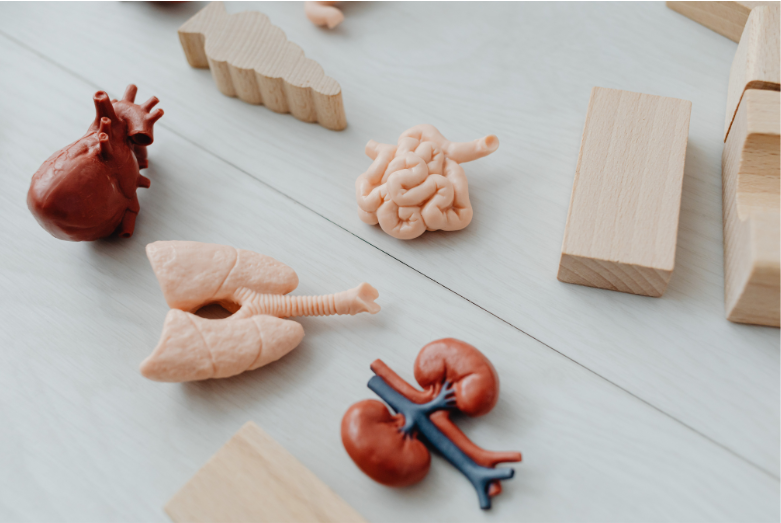
In homeopathy, the phrase “organ support” can be misunderstood—especially by those new to holistic medicine. Unlike conventional approaches that aim to stimulate, suppress, or replace organ function, homeopathic organ support works by gently supporting the body’s innate capacity to regulate and heal itself.
It is not about forcing an organ to “work harder,” nor about targeting lab values in isolation. Instead, organ support in homeopathy is contextual, constitutional, and respectful of the whole person. Let’s explore what this really means—and how homeopaths thoughtfully use certain remedies in this supportive role.
Organ Support in Homeopathy: A Different Paradigm
From a homeopathic perspective:
- Organs do not become ill on their own
- Symptoms reflect a disturbance of the vital force
- Organs express imbalance, rather than being the primary cause
Therefore, organ support remedies are not used as substitutes for constitutional treatment, but as adjuncts when appropriate—especially in chronic disease, recovery phases, or long-standing functional strain.
They may be used to:
- Support weakened or stressed organs
- Aid elimination and detoxification pathways
- Assist recovery after illness or prolonged medication use
- Gently reduce symptom burden while deeper work unfolds
When Do Homeopaths Consider Organ Support?
Experienced homeopaths may consider organ support remedies when:
- An organ system is clearly under strain (e.g., liver congestion, kidney weakness)
- There is a history of prolonged stress, medications, or chronic illness
- The constitutional remedy is acting slowly and the system needs gentler support
- The patient is fragile, elderly, or recovering from serious disease
- Palliation is ethically appropriate (e.g., advanced or irreversible pathology)
Importantly, organ support remedies are chosen thoughtfully and temporarily, always with an eye toward the whole case.
Commonly Used Homeopathic Remedies for Organ Support
(Educational overview – not for self-prescribing)
Liver Support Remedies
Used when there is sluggish metabolism, medication burden, digestive congestion, or toxic load.
- Chelidonium majus – Classic liver remedy; right-sided complaints, jaundice, fatty food intolerance
- Carduus marianus – Liver congestion, alcohol or drug-related strain, portal circulation issues
- Lycopodium – Functional liver weakness with digestive symptoms, bloating, 4–8 pm aggravation
- Nux vomica – Overstimulation, stress, medication excess, irritable digestion
Kidney & Urinary System Support
Often used when elimination is compromised or there is functional weakness.
- Berberis vulgaris – Renal pain radiating downward, gravel, urinary irritation
- Solidago – Gentle support for kidney function, especially in chronic weakness
- Apis mellifica – Edema, swelling, reduced urination with sensitivity
- Cantharis – Acute urinary burning and irritation (short-term use)
Heart & Circulatory Support
Used cautiously and respectfully, often alongside conventional care.
- Crataegus oxyacantha – Cardiac tonic; fatigue, recovery phase, age-related weakness
- Cactus grandiflorus – Constrictive chest sensations, circulatory tension
- Spigelia – Neuralgic heart pains, palpitations with anxiety
Heart remedies are never substitutes for emergency or cardiology care.
Lungs & Respiratory Support
Useful during recovery or chronic respiratory strain.
- Antimonium tartaricum – Weak chest, poor expectoration, rattling mucus
- Kali carbonicum – Chronic lung weakness, stitching pains, fatigue
- Phosphorus – Lung sensitivity, post-infection weakness, hemorrhagic tendency
Digestive & Pancreatic Support
- Iris versicolor – Pancreatic stress, burning digestion, headaches with GI symptoms
- China officinalis – Weak digestion after fluid loss, chronic depletion
- Carbo vegetabilis – Collapse states, poor digestion, lack of reaction
Nervous System & Adrenal Stress Support
Often used in burnout, exhaustion, or long-term stress patterns.
- Kali phosphoricum – Nervous exhaustion, mental fatigue
- Phosphoric acid – Burnout with apathy and weakness
- Avena sativa (homeopathic) – Gentle nerve tonic, recovery phase
A Crucial Distinction: Support ≠ Replacement
Homeopathic organ support:
- Does not replace hormones, enzymes, or life-saving medication
- Does not override the constitutional remedy
- Does not treat organs as isolated machines
Instead, it:
- Respects the body’s hierarchy of healing
- Works within the individual’s vitality
- Supports function without suppression
As Hahnemann reminds us, the goal is not to chase organs—but to restore balance to the whole person.
Why Individualization Still Matters
Even with organ support remedies:
- Two patients with “liver issues” may need entirely different remedies
- Symptoms, temperament, history, and vitality guide remedy choice
- What supports one person may hinder another
This is why self-prescribing organ remedies long-term can unintentionally complicate a case.
Final Thoughts
Organ support in homeopathy is gentle, intelligent, and respectful. When used well, it can:
- Ease the burden on stressed systems
- Support recovery and resilience
- Complement constitutional and conventional care
But it is always secondary to the person, not the pathology. If you are living with chronic organ stress, fatigue, or long-term illness, working with an experienced homeopath ensures that support is appropriate, ethical, and truly healing.
Medical Disclaimer:
This article is for educational purposes only and does not diagnose, treat, or replace medical care. Homeopathy does not replace medical diagnosis or emergency care. Always consult a qualified professional for individualized treatment.