
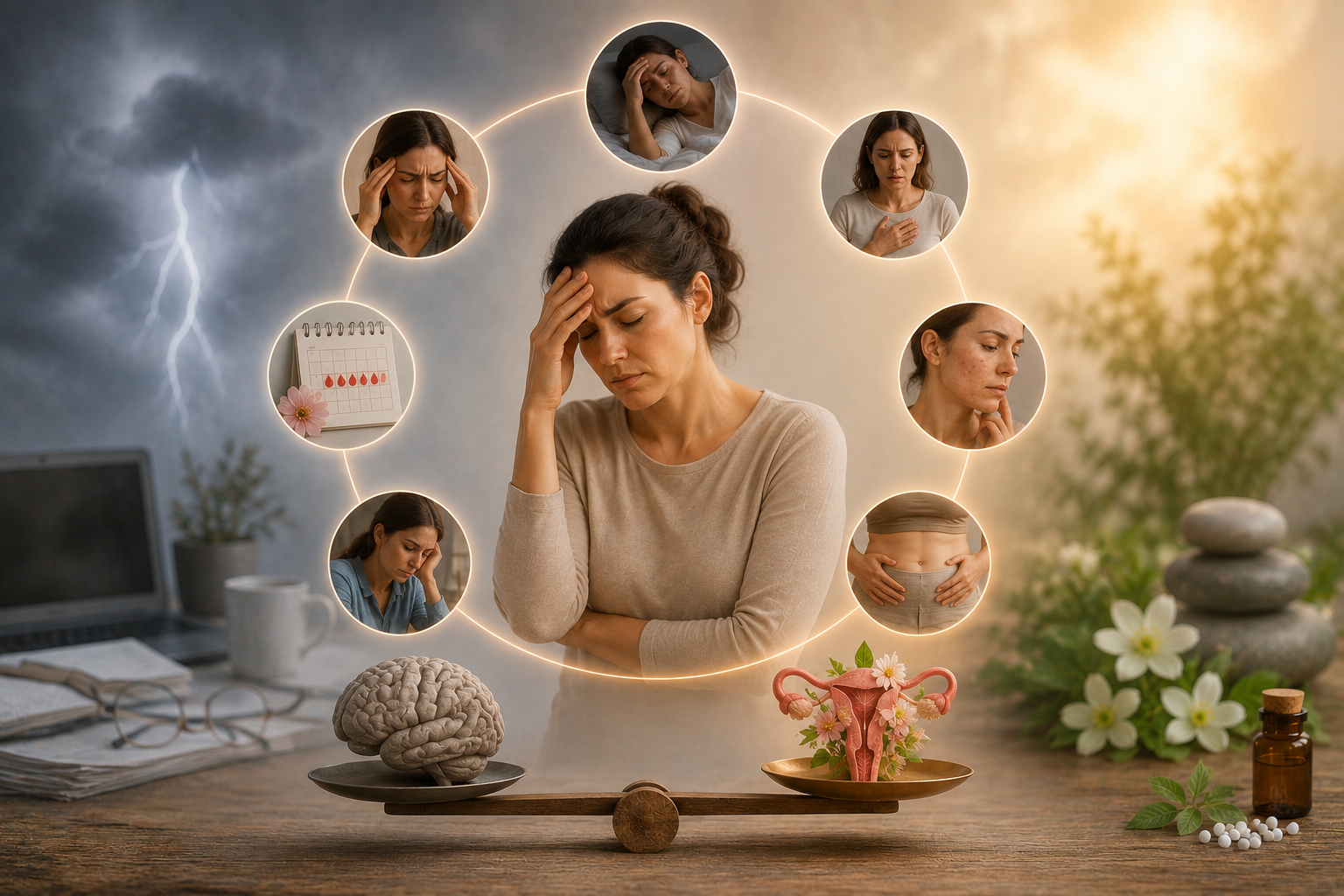
Feeling tired, wired, emotional, or unlike yourself? Your body may be trying to tell you something important. Modern life places enormous demands on women. Between work, family responsibilities, caregiving, financial pressures, and the constant stimulation of technology, many women live in a state of chronic stress without realizing how deeply it affects their health.
One of the first systems to feel the impact of ongoing stress is the hormonal system. Many women are surprised to discover that symptoms such as fatigue, anxiety, weight gain, sleep problems, irregular periods, or worsening PMS may not be isolated issues. They can be signs that stress and hormones have become intertwined.
As a classical homeopath, I often see women who have been told their blood tests are “normal” yet they continue to feel exhausted, overwhelmed, and disconnected from their usual selves. Homeopathy offers a holistic approach that seeks to understand the whole person and support the body’s natural ability to restore balance.
In this blog, we’ll explore the common signs that it may be time to address both your stress levels and hormonal health.
Understanding the Stress-Hormone Connection
Your hormones do not function independently. They operate as part of a complex network involving the brain, nervous system, thyroid, adrenal glands, ovaries, and other organs. When stress becomes chronic, the body prioritizes survival over long-term balance. Stress can influence:
- Cortisol production
- Thyroid function
- Sex hormone balance
- Blood sugar regulation
- Sleep quality
- Immune function
- Digestive health
Over time, this can create a domino effect throughout the body, leading to symptoms that seem unrelated but share a common root.
1. You’re Constantly Tired, Even After Sleeping
One of the most common signs of stress-related hormonal imbalance is persistent fatigue. You may:
- Wake up feeling unrefreshed
- Depend on caffeine to function
- Experience an afternoon energy crash
- Feel exhausted yet unable to relax
Many women describe feeling “wired but tired.” Despite sleeping for seven or eight hours, they never feel truly restored. This often indicates that the body’s stress-response system has been under pressure for an extended period.
2. Your Sleep Has Become Unpredictable
Hormonal balance and sleep are closely connected. Signs include:
- Difficulty falling asleep
- Waking between 2–4 AM
- Light, restless sleep
- Racing thoughts at bedtime
- Feeling alert when you should be tired
Poor sleep increases stress hormones, while elevated stress hormones further disrupt sleep, creating a cycle that can be difficult to break.
3. PMS Symptoms Are Becoming More Intense
Many women accept PMS as normal. However, severe PMS is often a sign that the body is struggling to maintain hormonal balance. Symptoms may include:
- Mood swings
- Irritability
- Anxiety
- Depression before periods
- Breast tenderness
- Bloating
- Headaches
- Food cravings
If you feel like a different person before your period each month, it may be time to look deeper.
4. Your Menstrual Cycle Has Changed
Stress can significantly affect menstrual health. Pay attention if you notice:
- Irregular cycles
- Missing periods
- Shorter or longer cycles
- Heavy bleeding
- Scanty bleeding
- Increased cramping
- Spotting between periods
The menstrual cycle often acts as a monthly report card for hormonal health. Changes should not be ignored, especially when accompanied by other symptoms.
5. You’re More Anxious Than Usual
Occasional anxiety is a normal part of life. However, persistent anxiety may indicate underlying hormonal imbalance. You may experience:
- Constant worry
- Feeling overwhelmed
- Panic attacks
- Increased sensitivity to stress
- Feeling emotionally reactive
Many women notice anxiety worsening around ovulation, before menstruation, during perimenopause, or during periods of chronic stress.
6. You’re Gaining Weight Despite Healthy Habits
Hormonal imbalance can make weight management more difficult. You may notice:
- Weight gain around the abdomen
- Increased sugar cravings
- Difficulty losing weight
- Fluctuating appetite
While diet and exercise remain important, hormonal and stress-related factors often play a significant role. Addressing these underlying patterns may be essential for lasting improvement.
7. Your Mood Feels Unstable
Stress affects more than physical health. It can impact:
- Patience
- Motivation
- Confidence
- Emotional resilience
- Ability to cope with daily challenges
You may find yourself:
- Crying more easily
- Feeling emotionally numb
- Becoming easily frustrated
- Losing interest in activities you once enjoyed
These changes are not simply “in your head.” They may reflect a deeper imbalance affecting both the nervous and endocrine systems.
8. Brain Fog Is Affecting Daily Life
Do you find yourself:
- Forgetting appointments?
- Losing your train of thought?
- Struggling to concentrate?
- Searching for simple words?
Brain fog is a frequent complaint among women dealing with chronic stress, thyroid dysfunction, hormonal shifts, and burnout. When the body is overwhelmed, mental clarity often suffers.
9. Your Digestive System Is Acting Up
The gut and hormonal system communicate constantly. Stress can contribute to:
- Bloating
- Constipation
- Diarrhea
- Food sensitivities
- Indigestion
- Irritable bowel symptoms
Many women notice digestive symptoms worsening during stressful periods or around hormonal changes.
10. You No Longer Feel Like Yourself
Perhaps the most important sign is one that doesn’t appear on any lab report. Many women say: “I don’t feel like myself anymore.” You may feel disconnected from your usual energy, confidence, motivation, or sense of well-being. When this feeling persists, it’s worth listening to what your body is trying to communicate.
Why Blood Tests Don’t Always Tell the Whole Story
Laboratory testing can provide valuable information, but it doesn’t always explain why someone feels unwell. Many women seek help because:
- Tests appear normal
- Symptoms are dismissed
- They are told stress is the problem
- They receive treatment for individual symptoms without addressing the bigger picture
A holistic assessment looks beyond isolated symptoms and considers the entire pattern of physical, emotional, and mental changes.
How Classical Homeopathy Approaches Stress and Hormonal Health
Classical homeopathy does not treat a diagnosis alone. Instead, it seeks to understand:
- Your unique symptoms
- Emotional responses
- Stress patterns
- Sleep tendencies
- Menstrual history
- Energy patterns
- Individual sensitivities
Every person experiences hormonal imbalance differently. Two women with the same diagnosis may require entirely different homeopathic remedies based on their unique symptom picture. The goal is not simply symptom suppression but supporting the body’s ability to regain balance and resilience.
Supportive Lifestyle Measures
Homeopathy works best as part of a comprehensive approach to health. Helpful strategies often include:
Prioritizing Sleep
Aim for consistent sleep and wake times whenever possible.
Managing Blood Sugar
Regular, balanced meals can help support hormonal stability.
Gentle Movement
Walking, yoga, stretching, and strength training can help regulate stress responses.
Stress Reduction
Meditation, breathing exercises, journaling, nature exposure, and setting healthy boundaries can all be beneficial.
Tracking Symptoms
Monitoring your cycle and symptoms can reveal important patterns and triggers.
When to Seek Professional Support
If you’ve been experiencing symptoms for several months, or if they are affecting your quality of life, it may be time to seek a more comprehensive evaluation. Early support can often prevent minor imbalances from developing into more complex health challenges. You do not need to wait until symptoms become severe before seeking help.
A Holistic Path Forward
Your symptoms are not random. Fatigue, anxiety, PMS, sleep disturbances, mood changes, digestive complaints, and menstrual irregularities may all be pieces of the same puzzle. By addressing both stress and hormonal health together, it is often possible to uncover deeper patterns and create a more effective path toward lasting wellness.
Classical homeopathy offers an individualized approach that considers the whole person—not just a diagnosis or a lab result. If you’ve been feeling exhausted, overwhelmed, or unlike yourself, your body may be asking for attention, support, and a deeper understanding of what is driving your symptoms.
Ready to Discover What Your Symptoms Are Trying to Tell You?
If you’re struggling with fatigue, PMS, perimenopause symptoms, anxiety, sleep problems, thyroid concerns, or other signs of hormonal imbalance, a comprehensive homeopathic consultation can help uncover the underlying patterns affecting your health.
Book a consultation: Together, we can explore your unique symptom picture and create an individualized plan designed to support your body’s natural healing process. Schedule your consultation today and take the first step toward restoring balance, energy, and well-being.