
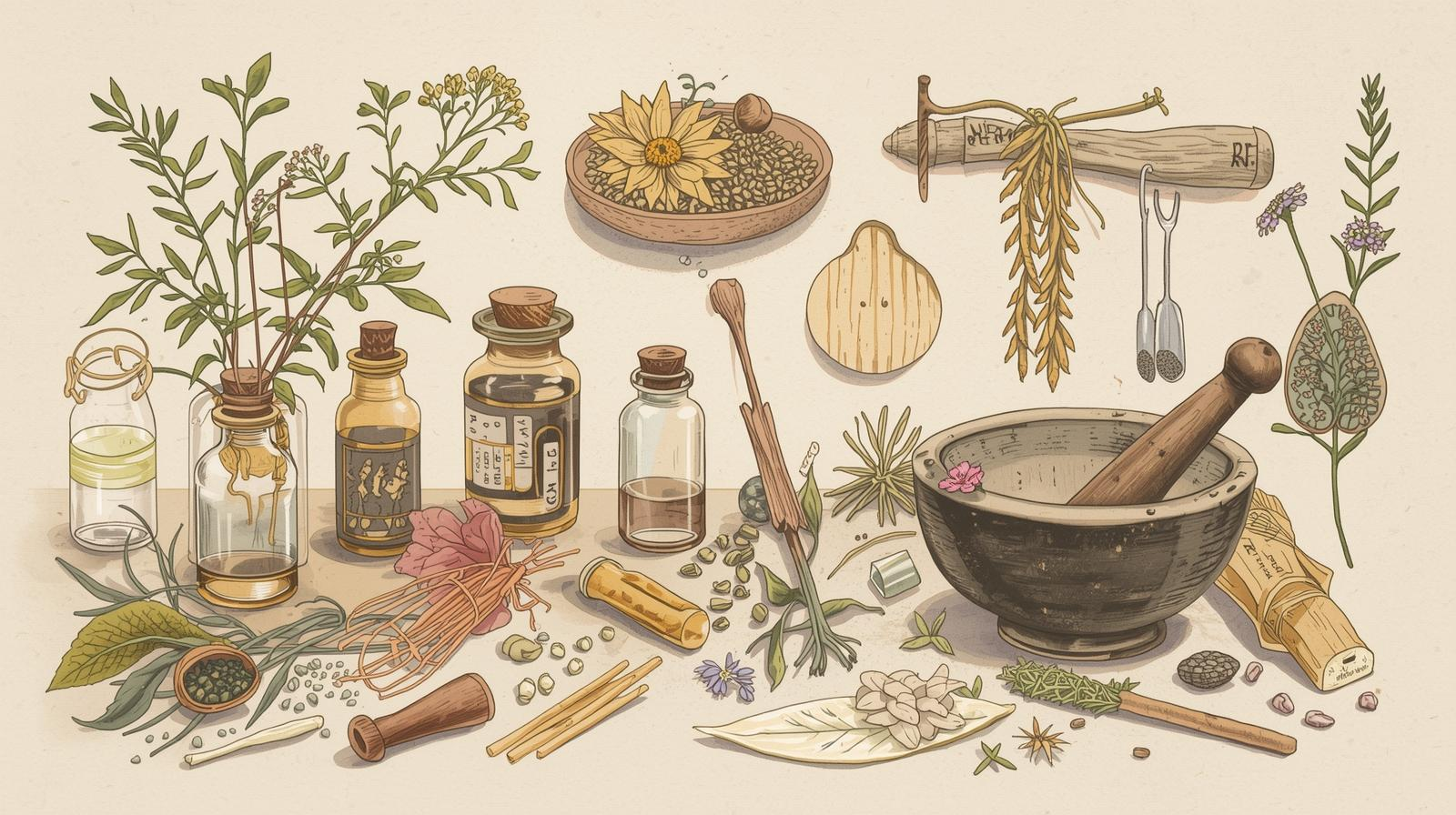
Many people assume that homeopathy and herbal medicine are the same because both use natural sources and fit under the “alternative medicine” category. But in reality, homeopathy and herbalism are two completely different systems of healing—in philosophy, preparation, dosage, and how they work in the body.
Whether you’re exploring natural medicine for the first time or want clarity on the treatments you use, understanding the differences can help you make informed decisions about your health.
What Is Herbal Medicine?
Herbal medicine (phytotherapy) uses leaves, roots, flowers, or extracts of plants in their natural, crude form to support the body.
How herbal medicine works:
- Acts biochemically, like mild natural drugs
- Provides nutrients, plant compounds, antioxidants
- Supports organs (liver, kidneys, digestion, immunity)
- Can interact with medications
- Works in material doses (teas, tinctures, capsules)
Example:
Chamomile tea for sleep, turmeric for inflammation, aloe vera for digestion.
Herbal medicine focuses on the pharmacological effects of plants.
What Is Homeopathy?
Homeopathy is a complete system of medicine based on the principle of “like cures like” and uses plant, mineral, or animal substances in ultra-diluted, potentised form.
How homeopathy works:
- Works on an energetic, vibrational level
- Stimulates the body’s self-healing response
- Remedies are prepared through serial dilution + succussion (potentisation)
- Highly individualized: the remedy matches the person’s total symptom picture
- No toxicity or organ load
- Safe for babies, pregnancy, elderly
Homeopathy focuses on individual patterns, emotions, and the root cause, not just the diagnosis.
Key Differences Between Homeopathy and Herbal Medicine
| Feature | Homeopathy | Herbal Medicine |
|---|---|---|
| Source | Plants, minerals, animals | Plants only |
| Preparation | Dilution + potentisation | Crude extracts (teas, tinctures, capsules) |
| Dosage | Ultra-diluted | Material (measurable) |
| How it works | Energy-based, stimulates healing | Biochemical, supports organs |
| Focus | Whole person, emotional & physical picture | Primarily physical symptoms |
| Safety | Very high; no toxicity | Can interact with medications |
| Individualisation | Highly specific remedy selection | Broad supportive use |
Why People Confuse the Two
- Both come from nature
- Both aim for gentler healing
- Both avoid synthetic drugs
- Both used in integrative and holistic health
But their philosophies, preparations, and applications are fundamentally different.
Can Homeopathy and Herbal Medicine Be Used Together?
Yes—when used properly.
Many homeopaths use herbs (like Calendula cream, Chamomile tea, or Ashwagandha) as supportive therapy while homeopathic remedies address the deeper, individualized picture.
Important: Some strong herbal tinctures can antidote homeopathic remedies, so it’s best to get guidance from a trained practitioner.
Which One Should You Use?
Choose Herbal Medicine if:
- You need organ support (liver, kidneys, digestion)
- You want nutritional or antioxidant benefits
- You want gentle, plant-based symptom support
Choose Homeopathy if:
- You want deeper emotional + physical healing
- You have chronic, recurring symptoms
- You react strongly to medications
- You want safe pregnancy/baby-friendly treatment
- You want a medicine tailored exactly to your symptoms
Often, the best approach is integrative, using herbs and homeopathy in harmony.
Common Questions
Does homeopathy contain actual herbs?
Not in herbal doses.
A homeopathic remedy made from a plant will contain the plant’s energetic imprint, not the crude chemical extract.
Is homeopathy just diluted herbs?
No.
Potentisation changes the remedy’s nature entirely — it is no longer a chemical substance but an energetic medicine.
Can I replace my herbal supplements with homeopathy?
Not always.
Homeopathy and herbal medicine serve different purposes. A professional can help you know when to use which.
Conclusion
Homeopathy and herbal medicine are both valuable natural healing systems, but they are not the same. Herbalism works through plant chemistry; homeopathy works by stimulating the body’s own healing intelligence.
Both can bring profound benefits when used appropriately — and understanding their differences helps you choose the right path for your health.