
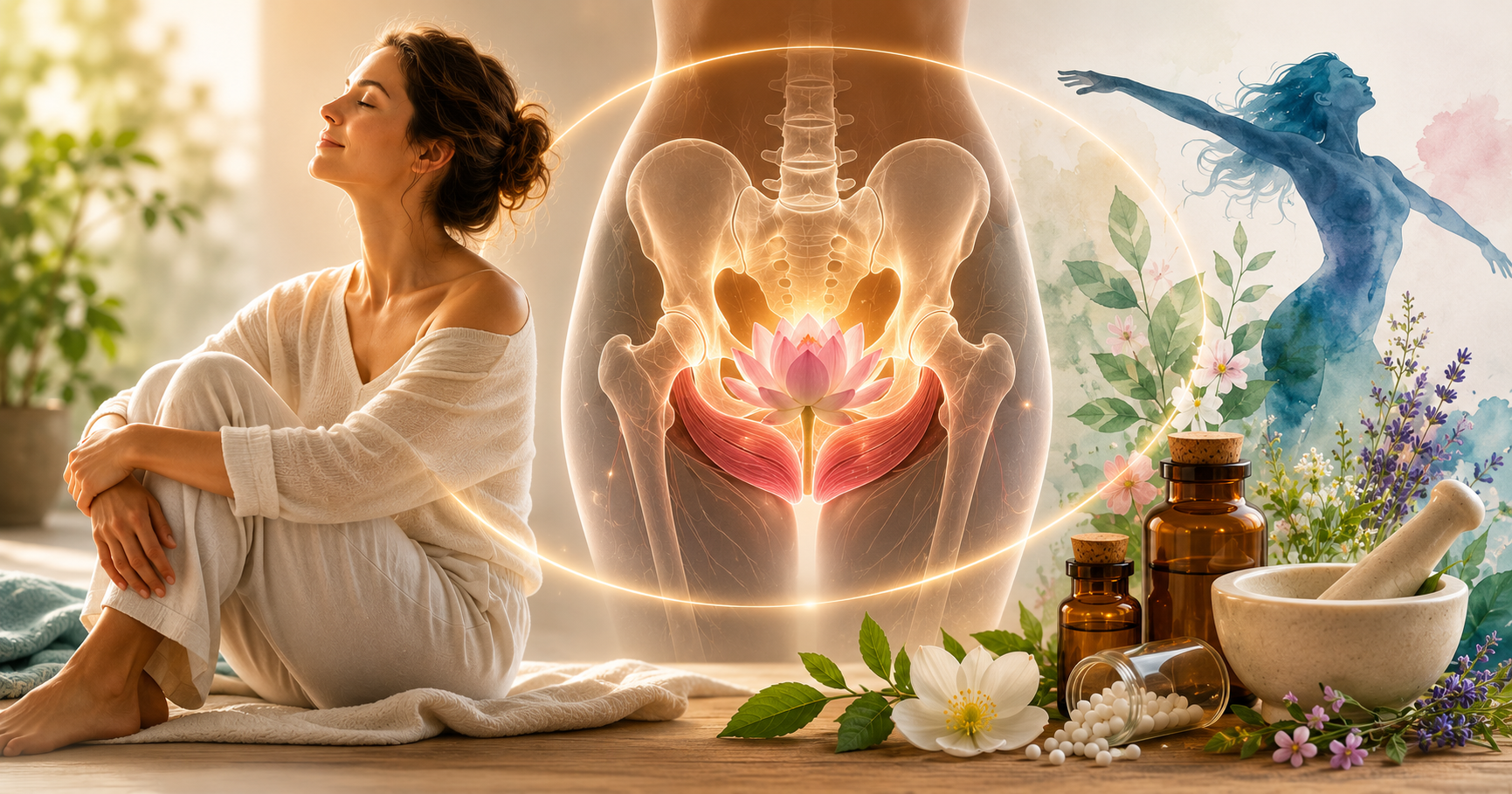
Many women silently struggle with pelvic floor problems for years before seeking help. They may experience bladder leaks when they laugh or exercise, a feeling of heaviness in the pelvis, pain during intimacy, persistent pelvic discomfort, or a sensation that “something isn’t quite right.” Often, these symptoms become more noticeable after childbirth, during perimenopause and menopause, or following pelvic surgery.
While pelvic floor issues are common, they are not something you simply have to accept as a normal part of being a woman. At our clinic, we use classical homeopathy as part of a holistic approach to help women address the underlying factors contributing to pelvic floor dysfunction and restore overall health and vitality.
What Is the Pelvic Floor?
The pelvic floor is a group of muscles, ligaments, and connective tissues that support the bladder, uterus, bowel, and other pelvic organs. A healthy pelvic floor helps with:
- Bladder control
- Bowel function
- Sexual function
- Core stability
- Organ support
When these tissues become weakened, strained, injured, or dysfunctional, a variety of symptoms can develop.
Common Pelvic Floor Symptoms
Women seek help for a wide range of pelvic floor concerns, including:
Urinary Symptoms
- Leaking urine when coughing, sneezing, laughing, or exercising
- Frequent urination
- Urgency to urinate
- Difficulty fully emptying the bladder
- Recurrent urinary discomfort
Pelvic Organ Prolapse
Some women describe:
- A dragging sensation
- Pelvic pressure
- A feeling that something is “falling down”
- Visible bulging in the vaginal area
Common prolapses include:
- Bladder prolapse (cystocele)
- Rectocele
- Uterine prolapse
Pelvic Pain
Women may experience:
- Aching in the pelvis
- Low back pain
- Vaginal discomfort
- Pain during intercourse
- Pressure after standing for long periods
Bowel Symptoms
- Constipation
- Difficulty with bowel movements
- Incomplete emptying
- Rectal pressure
Why Do Pelvic Floor Problems Develop?
Pelvic floor dysfunction rarely has a single cause. Contributing factors may include:
Pregnancy and Childbirth
The pelvic floor undergoes enormous physical stress during pregnancy and delivery. Even years later, women may notice lingering weakness, prolapse, bladder issues, or pelvic pain.
Hormonal Changes
Declining estrogen levels during perimenopause and menopause can affect:
- Connective tissue strength
- Muscle tone
- Tissue elasticity
- Bladder function
Chronic Stress
Many women are surprised to learn that stress can contribute significantly to pelvic floor symptoms. Some women unconsciously hold tension in their abdomen and pelvic floor throughout the day. When the body remains in a chronic state of tension:
- Muscles may tighten excessively
- Healing slows down
- Hormonal balance becomes disrupted
- Pain sensitivity increases
Surgery and Trauma
Previous surgeries, injuries, difficult births, or emotional trauma may all influence pelvic floor health.
Chronic Constipation
Repeated straining places significant pressure on pelvic structures and can worsen prolapse symptoms over time.
The Conventional Approach
Conventional treatment options may include:
- Pelvic floor physical therapy
- Kegel exercises
- Pessaries
- Hormone therapy
- Medications for bladder symptoms
- Surgery in severe cases
These treatments can be extremely valuable and often form an important part of recovery. However, many women feel there is still a missing piece when they continue to experience symptoms despite treatment or when new symptoms develop elsewhere in the body.
How Homeopathy Views Pelvic Floor Problems
Classical homeopathy does not treat the pelvic floor as an isolated body part. Instead, we look at the entire person. Two women may have the same diagnosis—such as bladder prolapse—but require completely different remedies because their overall symptom pictures are different.
During a consultation, we explore:
- Physical symptoms
- Hormonal health
- Energy levels
- Sleep patterns
- Stress responses
- Emotional well-being
- Personal health history
- Pregnancy and birth history
The goal is to understand why the body has become vulnerable and what is preventing optimal healing.
Homeopathic Remedies Commonly Considered
A homeopathic prescription should always be individualized. The following remedies are examples of those that may be considered when the symptom picture matches.
Sepia
Women often describe feeling as though everything is “falling out.” Often considered for women who experience:
- Pelvic heaviness
- A bearing-down sensation
- Symptoms that worsen with prolonged standing
- Hormonal imbalance
- Exhaustion from caring for others
Lilium Tigrinum
May be considered when there is:
- Marked pelvic pressure
- Sensation of organs descending
- Urinary urgency
- Need to cross the legs for support
Murex
Sometimes considered when pelvic symptoms are accompanied by:
- Uterine sensitivity
- Pelvic congestion
- Increased awareness of pelvic organs
Calcarea Carbonica
May be suitable for women who experience:
- Weak connective tissues
- Heaviness and fatigue
- Slow recovery after childbirth
- Tendency toward prolapse
Nux Vomica
May be considered when symptoms are associated with:
- Chronic stress
- Constipation
- Sedentary lifestyle
- Pelvic tension
Again, remedy selection is based on the entire symptom picture—not simply the diagnosis.
Why Individualization Matters
One of the most common reasons women become frustrated with self-prescribing is that they choose a remedy based solely on their diagnosis. In classical homeopathy, the remedy is selected according to the unique way your body expresses imbalance. This individualized approach is one reason many women seek professional homeopathic care for chronic pelvic floor concerns.
Homeopathy Works Best as Part of a Comprehensive Plan
At our clinic, we often encourage women to combine homeopathy with:
- Pelvic floor physiotherapy
- Appropriate movement and exercise
- Stress management
- Nutritional support
- Hormonal evaluation when indicated
- Good bowel health practices
The most successful outcomes usually occur when the whole person is supported.
When Should You Seek Help?
Do not ignore symptoms such as:
- Pelvic pressure
- Urinary leakage
- Vaginal bulging
- Persistent pelvic pain
- Difficulty emptying the bladder or bowels
Early intervention often provides the best opportunity for improvement and may help prevent symptoms from progressing.
A Whole-Person Path to Healing
Pelvic floor symptoms can affect confidence, relationships, exercise, work, and overall quality of life. You do not have to suffer in silence.
By looking beyond the diagnosis and understanding the deeper patterns contributing to your symptoms, classical homeopathy aims to support the body’s natural healing processes and help restore balance on a physical, emotional, and hormonal level.
If you are experiencing pelvic floor issues and would like an individualized assessment, we invite you to schedule a consultation. Together, we can explore a personalized path toward greater comfort, confidence, and well-being.
Struggling with pelvic pressure, bladder leaks, prolapse, or pelvic pain?
Book a consultation: Every woman’s experience is unique. A comprehensive homeopathic consultation can help uncover the underlying factors contributing to your symptoms and create a personalized plan for recovery.
Shcedule your consultation today and take the first step toward restoring comfort, confidence, and pelvic health.