
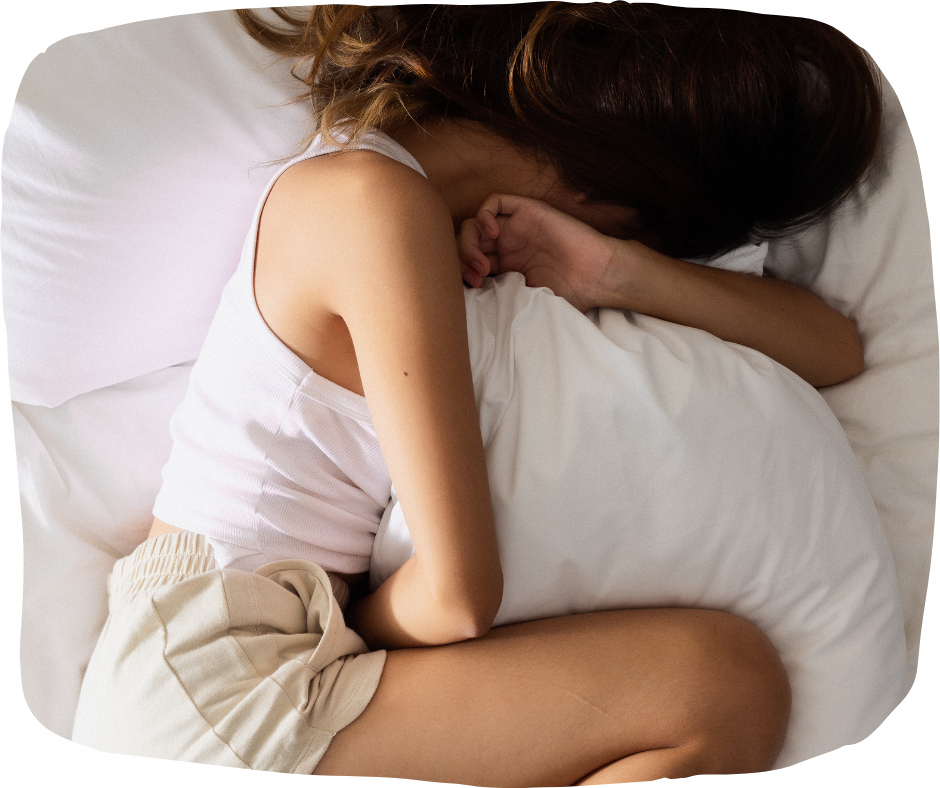
Premenstrual tension (often called PMS) is one of the most common reasons women seek holistic care.
Mood changes, irritability, anxiety, fatigue, bloating, breast tenderness, headaches, sleep disturbance, and food cravings can appear in the days—or even weeks—before menstruation. For some women, these symptoms are mild and manageable. For others, they significantly affect relationships, work, and emotional well-being.
Homeopathy offers a gentle, individualized way to understand and support these cyclical changes.
PMS Is Not “Just Hormones”
While hormonal fluctuations play a role, PMS is rarely only a hormonal issue.
From a homeopathic perspective, premenstrual symptoms reflect how a woman’s whole system responds to cyclical change. Stress, nervous system regulation, emotional load, sleep quality, digestion, and long-standing patterns all influence how the body moves through the menstrual cycle.
This is why two women with the same diagnosis of PMS can experience it very differently—and why a single remedy or supplement rarely works for everyone.
How Homeopathy Views Premenstrual Symptoms
Homeopathy does not aim to suppress premenstrual symptoms or “override” the cycle.
Instead, symptoms are viewed as information:
- What changes emotionally before the period?
- Does energy rise or fall?
- Is there a need for withdrawal, reassurance, activity, or rest?
- Are symptoms primarily physical, emotional, or both?
These patterns help reveal how the system is adapting—or struggling—during the luteal phase of the cycle.
The Importance of Individualization
In classical homeopathy, treatment is based on the person, not the label.
Some women experience PMS as:
- Irritability and impatience
- Tearfulness and sensitivity
- Anxiety or feeling overwhelmed
- Mental fog or fatigue
- Physical congestion, bloating, or pain
Even when symptoms look similar on the surface, the underlying experience may be very different. Homeopathic care seeks to match the remedy to this unique pattern, rather than offering a generic solution.
Why There Is No Single “PMS Remedy”
Premenstrual tension is not one condition. It is a collection of experiences that arise during a particular phase of the menstrual cycle.
Two women may both say they have PMS, yet one feels irritable and restless, while another feels tearful and withdrawn. One may crave company and reassurance; another may want to be left completely alone.
Because homeopathy is based on individualization, there is no one-size-fits-all remedy for premenstrual symptoms.
Common Remedy Patterns Seen in Premenstrual Tension
While remedies are never chosen solely by diagnosis, certain patterns are frequently seen in women seeking homeopathic care for PMT. The descriptions below are not prescriptions, but educational examples of how homeopaths think.
Sepia
Often associated with irritability, emotional flatness, or a desire to withdraw before the period. Women needing this remedy may feel overwhelmed by responsibilities and crave solitude, yet feel guilty for wanting space.
Pulsatilla
Commonly seen in women whose premenstrual symptoms include tearfulness, sensitivity, and a need for reassurance. Emotions may be changeable, and symptoms often improve with comfort and connection.
Natrum muriaticum
May be considered when premenstrual symptoms include inwardness, emotional sensitivity, or difficulty expressing feelings. These women often prefer privacy and may feel worse with consolation.
Lachesis
Sometimes associated with heightened intensity before menstruation—emotionally or mentally. Symptoms may worsen before the flow begins and improve once menstruation starts.
Ignatia
Often linked to emotional tension, mood swings, or suppressed feelings, especially when stress or grief is part of the picture.
These brief sketches are intentionally incomplete. In practice, a homeopath looks far beyond a few emotional traits before selecting a remedy.
PMS and the Nervous System
Many premenstrual symptoms reflect nervous system strain rather than hormonal imbalance alone.
Chronic stress, emotional overload, and burnout can amplify PMS by reducing the body’s ability to regulate itself smoothly across the cycle. In these cases, addressing stress resilience and overall vitality becomes just as important as addressing menstrual symptoms.
Homeopathy can support this process by working gently with the body’s regulatory systems over time.
Acute vs. Constitutional Support
Some women seek help specifically for premenstrual symptoms. Others notice that PMS is just one expression of a broader pattern—such as chronic stress, mood sensitivity, sleep disturbance, or hormonal irregularity.
In these cases, constitutional homeopathic care may help create more balanced cycles overall, rather than focusing only on the days before menstruation.
This approach respects the interconnected nature of women’s health.
A Gentle, Long-Term Perspective
Healing PMS is rarely about eliminating all symptoms immediately.
More often, women notice gradual changes:
- Symptoms becoming less intense
- Emotional reactions feeling more manageable
- Better recovery after stress
- A greater sense of stability across the cycle
These shifts signal improved resilience rather than suppression.
When to Seek Professional Support
While occasional premenstrual discomfort is common, severe or worsening symptoms—especially those affecting mental health, daily functioning, or safety—deserve professional attention.
Homeopathy works best when used thoughtfully, alongside appropriate medical evaluation when needed.
A Note on Self-Prescribing
Because premenstrual symptoms are complex and highly individual, repeated self-prescribing—especially for chronic or severe PMT—often leads to limited or inconsistent results.
Working with a trained homeopath allows the remedy choice to be based on the whole picture, and adjusted thoughtfully as patterns change.
Honoring the Cycle
Premenstrual changes are not a personal failure or a weakness.
They are part of a complex, intelligent system responding to internal and external demands. Homeopathy offers a way to listen to that system more closely and support it without force.
When care is individualized, respectful, and patient, many women find that their cycles become not something to endure—but something they understand more deeply.